Last episode of South Park wasn’t so great. It was funny but pro Man Bear Pig.
Beef prices are rising worldwide with highest rise is USA mainly due to cattle shortage.
Connecting Patriotism and beef in restaurants was partly funny. Also politics on high beef prices who don’t even eat beef was also mildly amusing.
Finally saying that it’s not about beef but patriotism and even Patriotic Guinea Pig on a stick with extra butter was able to replace beef is somewhat sarcastic.
But my views on Non vegetarian diet is mixed. Personally I try to avoid Non veg but I don’t dislike it. And I have found that if one don’t even take the first step of condemning it publically which is the right thing to do, the taste always takes over morality.
It is like a drug. Drugs are bad mkay. I mean if there is a room for improvement one should improve. That’s all I am saying.
I found that South Park is not really sure how to handle the situation of Global Warming. First they made fun of Al Gore. Then later on corrected saying it was a mistake and Man Bear Pig is infact real.
There are two things I would like to say to the creators if they happen to read by chance.
First- Solutions for boredom is more boredom not drugs(Which one depends on context). I think they know it as they create great art.
Second- Change starts with one. Plus you have a huge following. You can make America really great specially when there is going to be food shortage in the coming time due to WW3.
I agree with their depiction of how hunting is done in America and is really inhumane. That’s why I also said to stop killing wild animals. But pets like Guinea Pigs in my case you can. I have even killed parrots.
If killing one could save a lot of them was my intention. Rest is hard to explain. I don’t know if I did good or bad but I have to emotionally support three people who are really depressed but never acknowledge. All the acknowledging part has to be done by me. Somehow they are above science and psychology. Only I am not.
You must be knowing the classic tale. There are two lines of equal length. One can make one greater in two ways. Increasing as well as decreasing the length of any one. They choose decreasing. No matter how far I bring everybody their way of becoming bigger is same. Just like parasites. It’s only the law that I am following otherwise it would not be Guinea Pigs I would have killed. Neither Parrots. Anyway what’s done is done.
So recap now
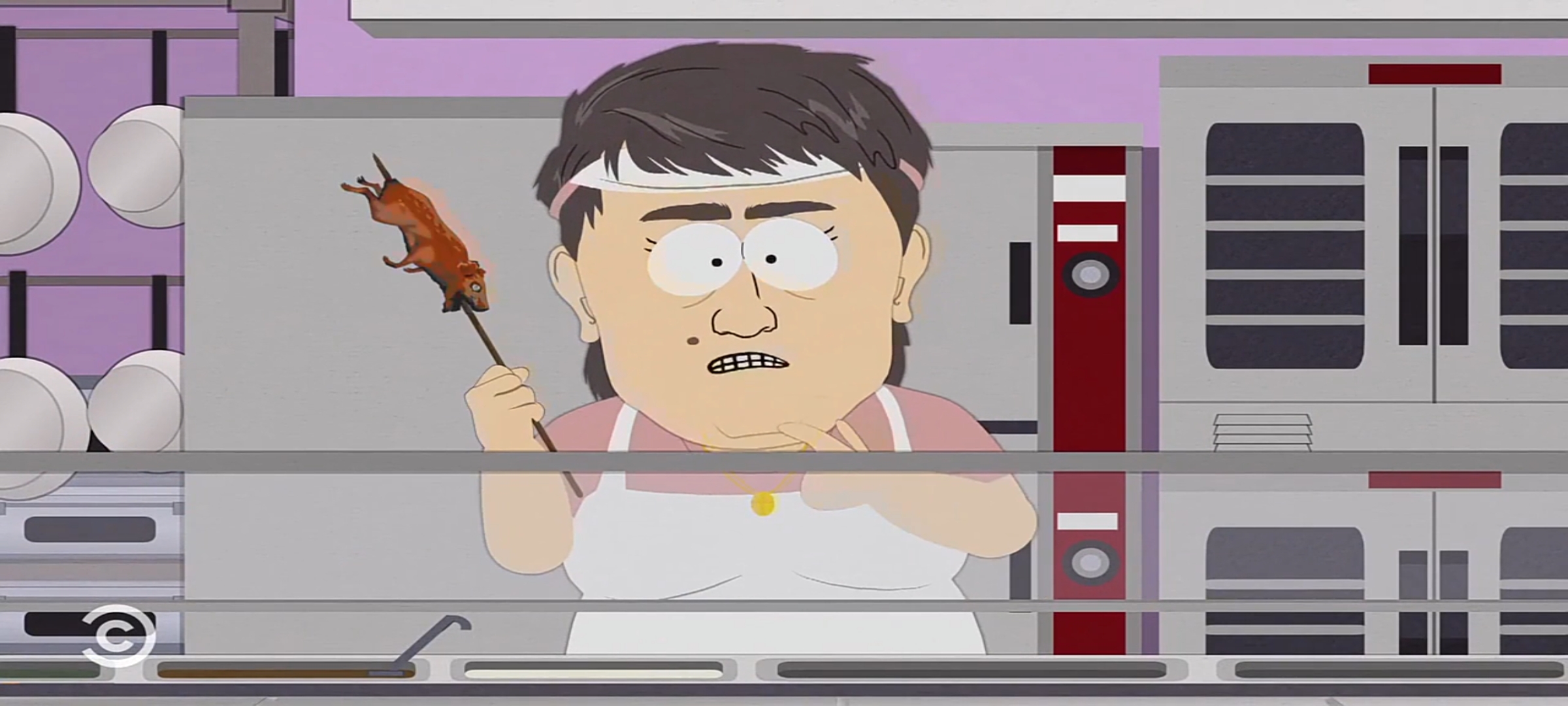

What’s CUY. It’s Guinea Pig on a stick.


How am I suppose to eat that.



Nobody cares about Italian brainrot dad. That’s so last year.

The Government is deciding what to do with our beef. That doesn’t seem fair.
Yeah tell me about it.


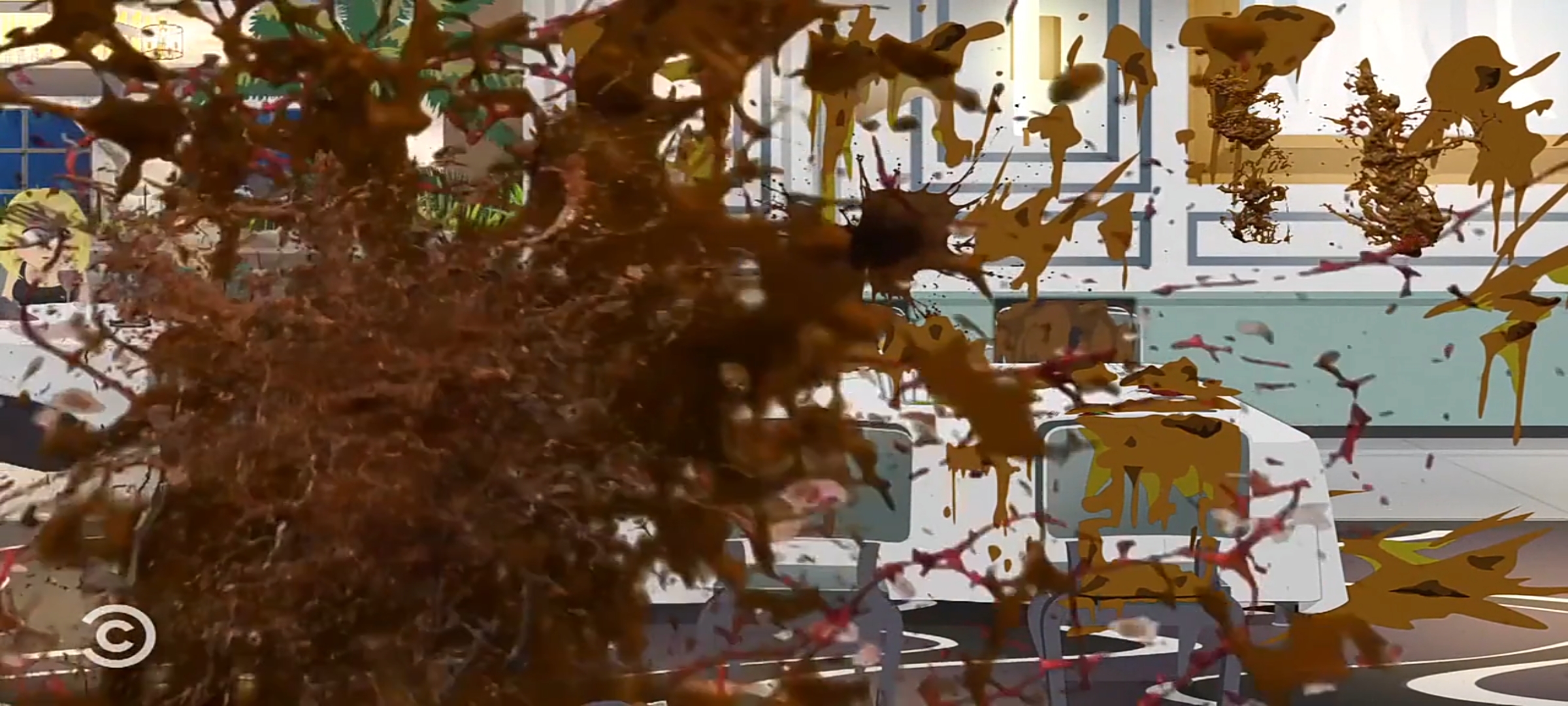
Patriotic beef gives explosive diarrhea.
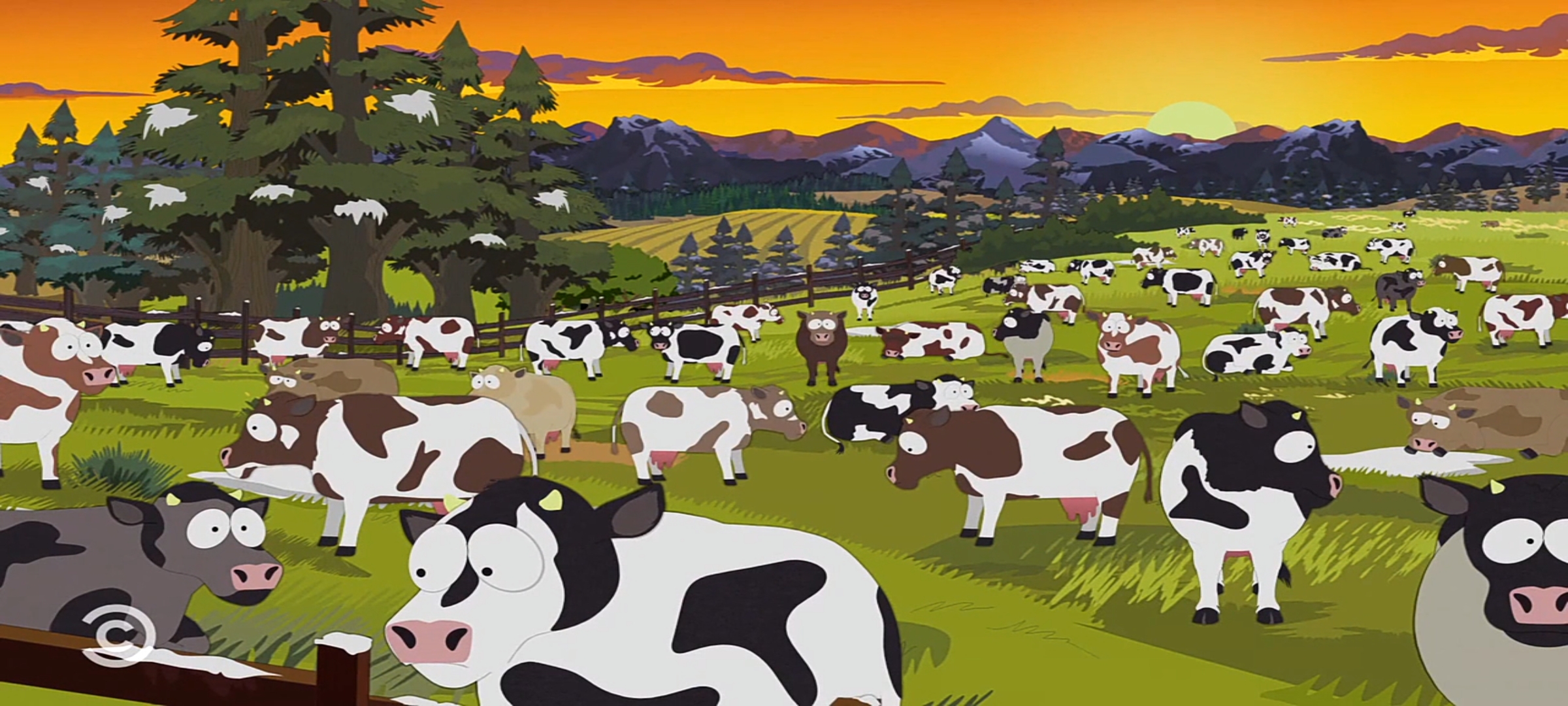




There is cattle shortage in South America. Cows are the same just more patriotic due to massage, care and beer diet.


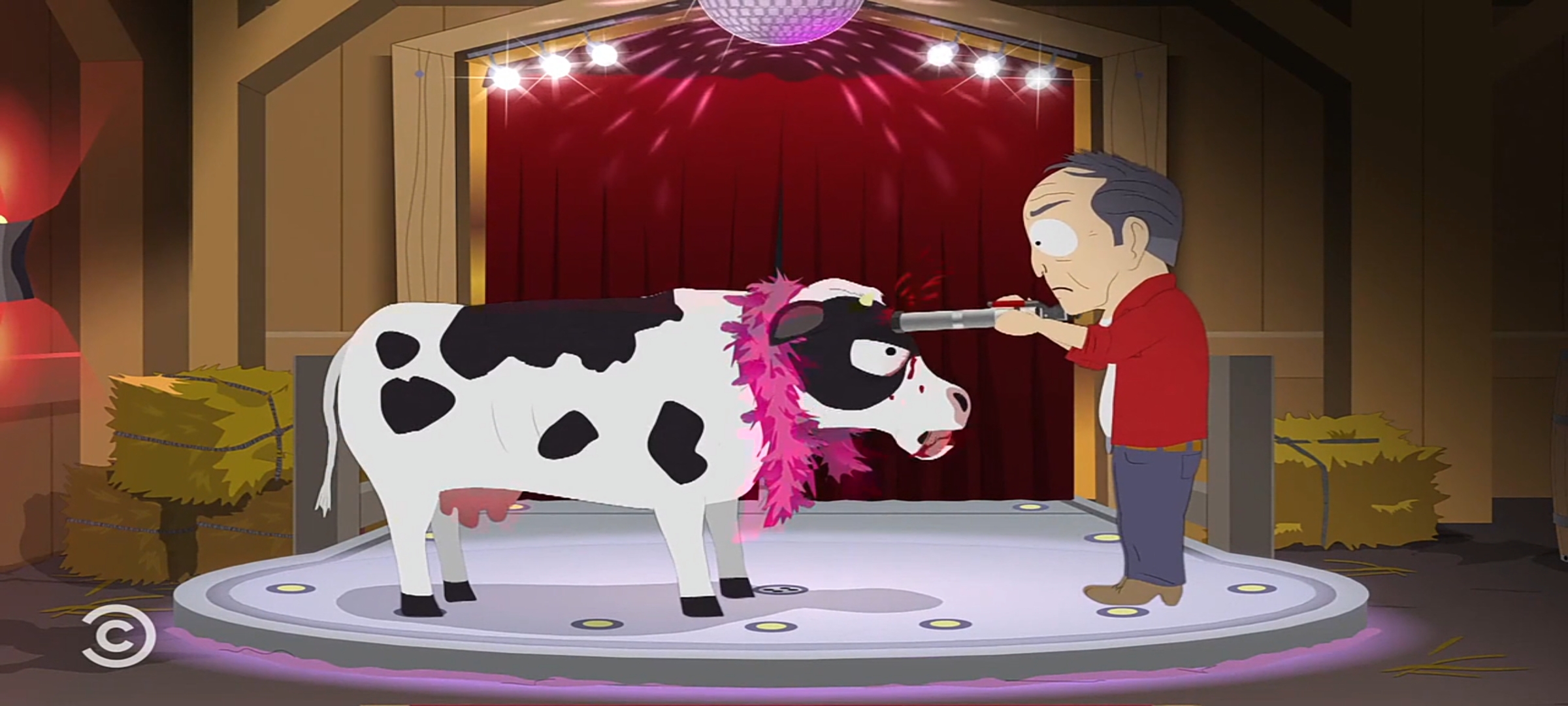



The Clientele is now rich people. Cattle Ranch for VIPs is like Strip Clubs now.


Play on word. We are going to control your beef. South American beef.




South American Cows are being highjacked by sizzlers.
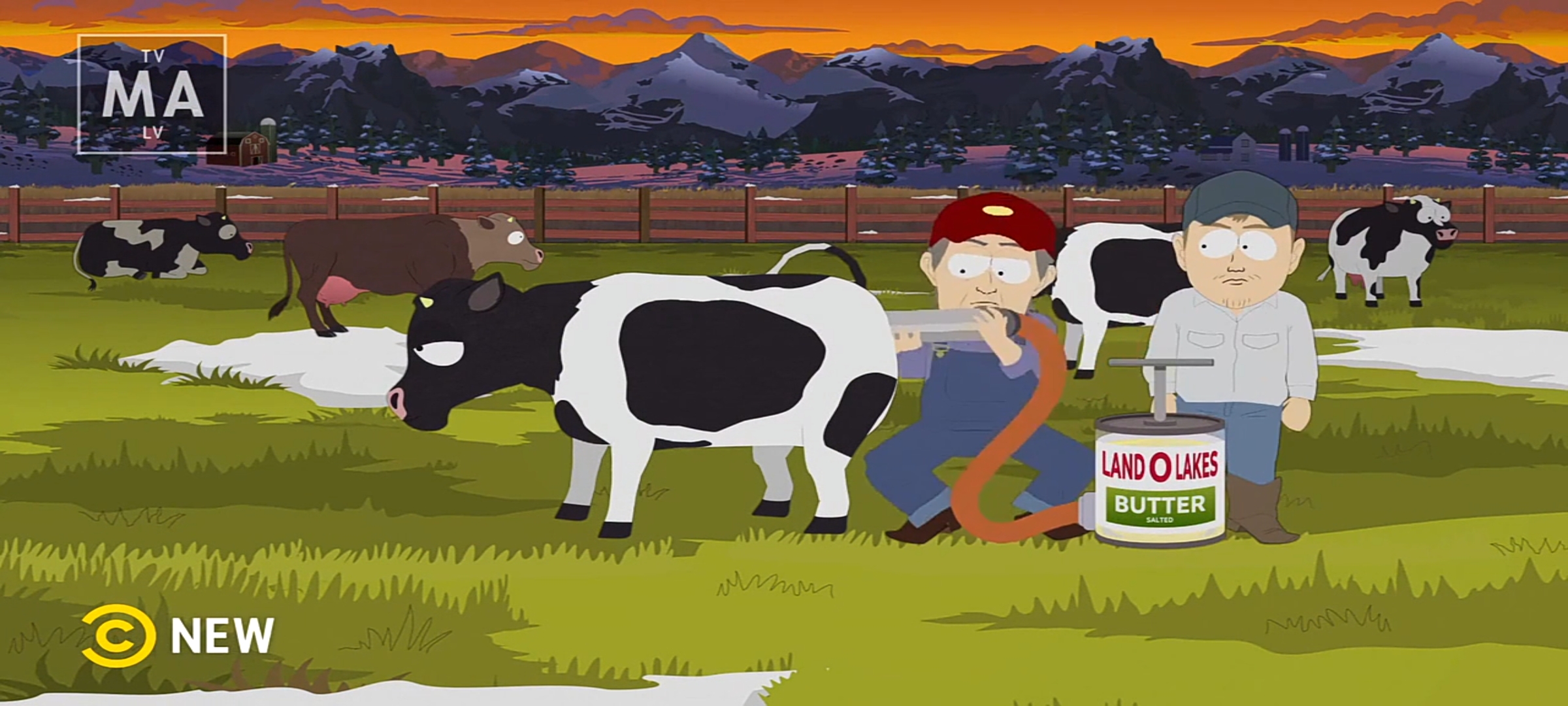
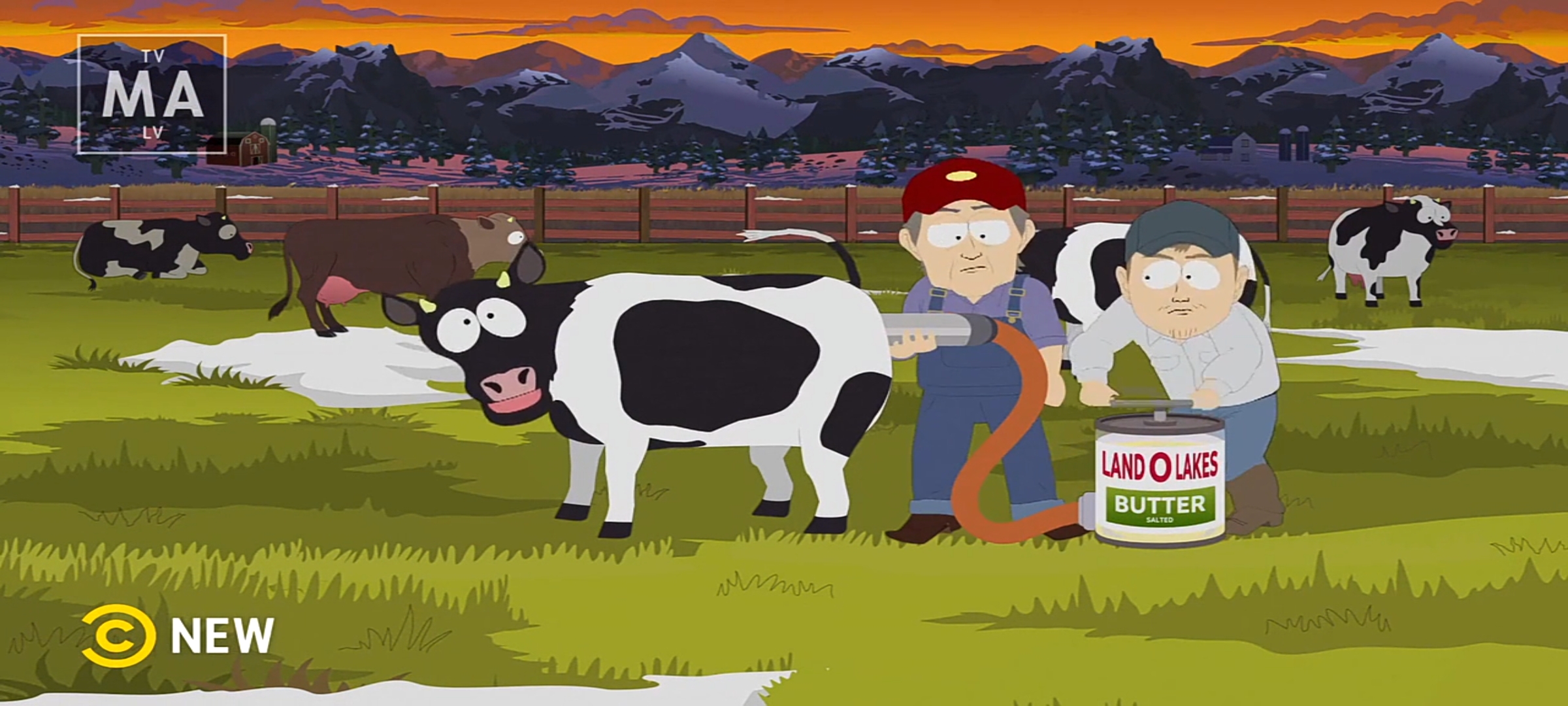
Cows are loaded with extra butter.


You can throw dog poop at other in GTA 6.



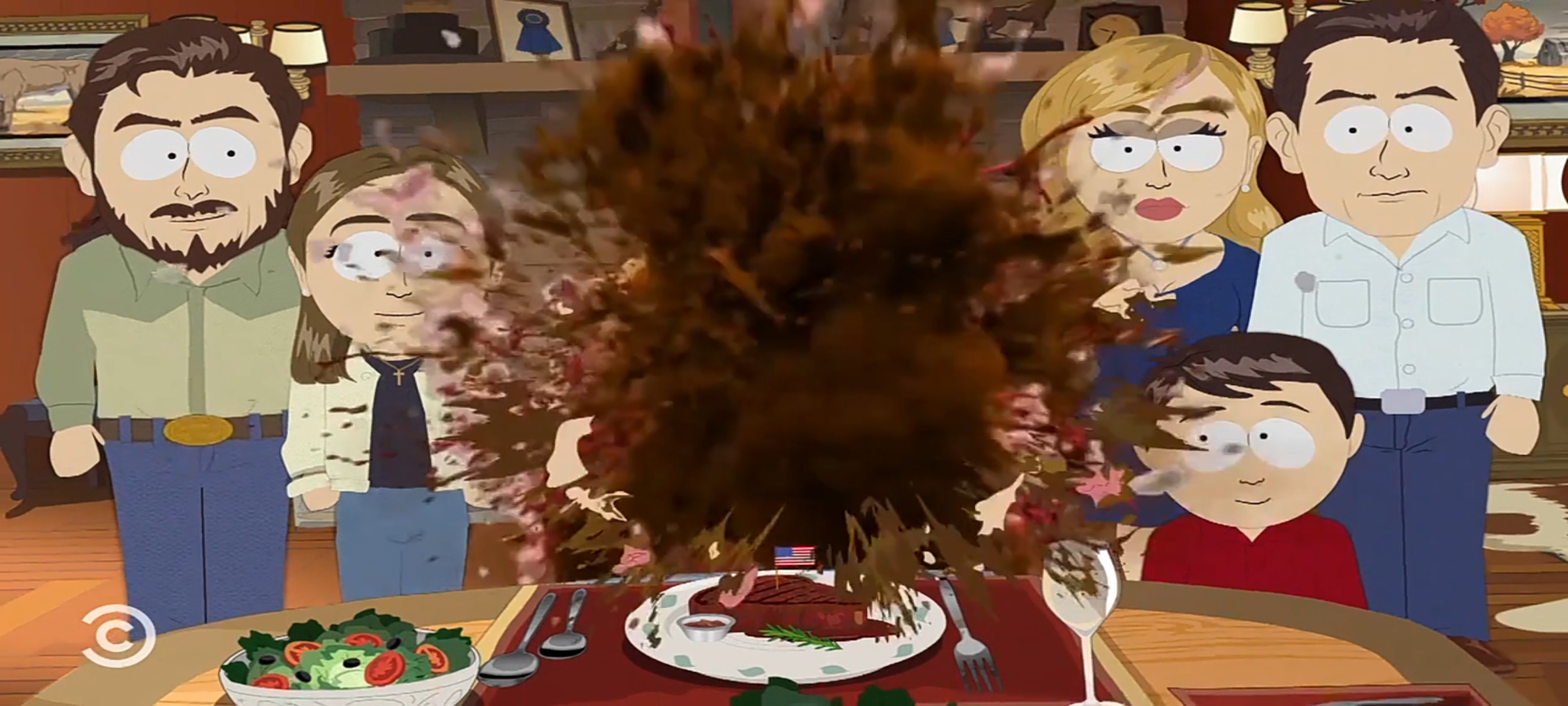

BS Cowboy. Didn’t get it.



It looks a little like you two had patriotic beef.


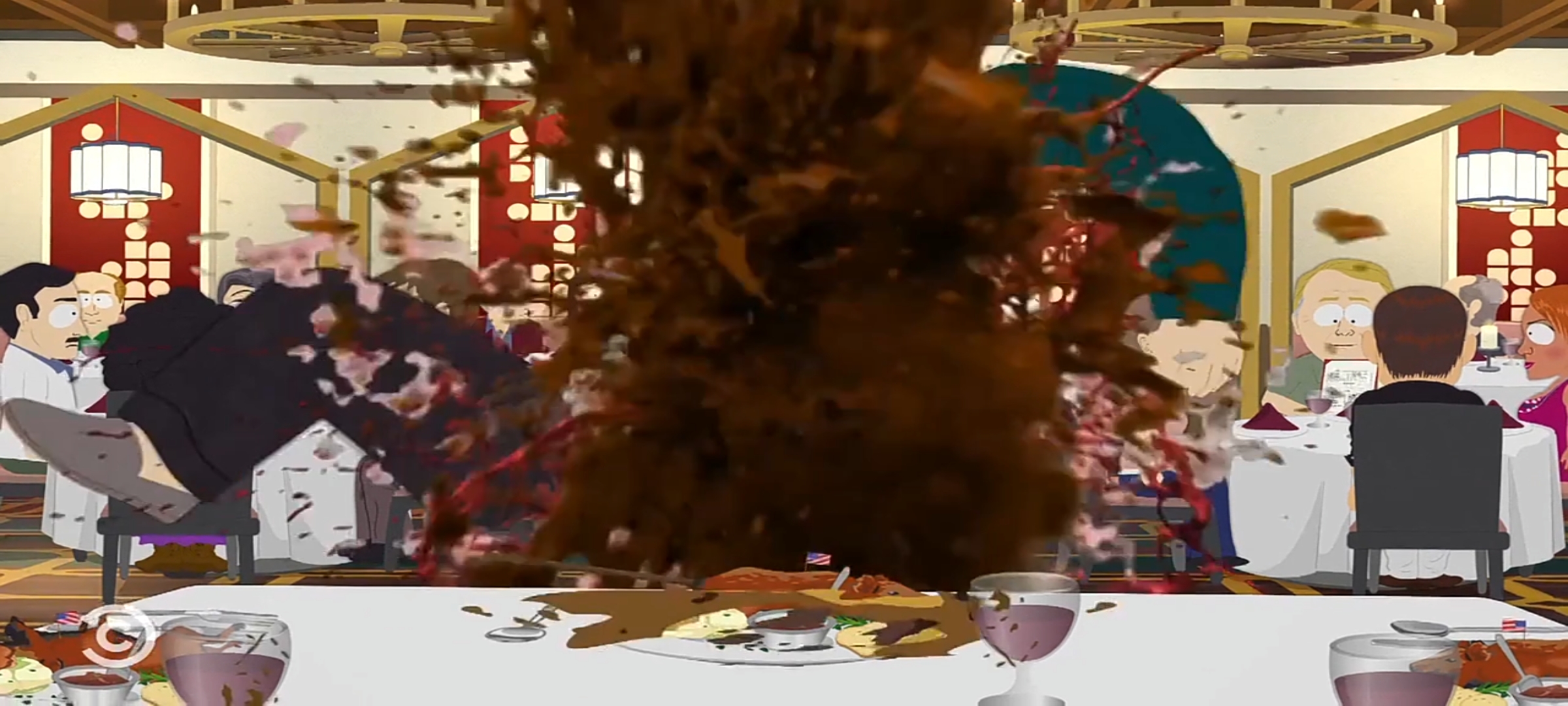


Patriotic Guinea Pig on a stick gives explosive diarrhea as well.
You know Cows are holy in India. Yet India is second to third largest exporter of beef in the world. So the point is not of any moral superiority but self reflection and insatiability of Ego through worldly objects. Cow as food or God have no difference for the Ego.
In simple words the episode was funny but when I looked it with different perspective it was total SHIT(No Pun Intended) like this post. By the way I like South Park. It is one of mY favourite. Most of it I can’t understand at the first time watching but still.
The following is Osho’s words about the Tongue. (Translated. Original Hindi)
There’s an organ in your body, and this organ is so small that if you ask anyone which is the most powerful organ , no one will name it. Some will say the heart, some will say the brain, some will say the hands. But the organ I’m talking about is the most powerful of all. And this organ is the tongue. Now wait, don’t say it so quickly. Yes, we know we eat with the tongue, because if you think that way, you know only as much as an illiterate person knows. The Lithuanians wrote entire treatises on this tongue. He said, “It is this soul that can liberate you, and it is this soul that can bind you, and most importantly, it is this soul that holds the key to your consciousness. But you are using it only for eating and speaking, and that too for useless things. So today, learn what the sages knew about this tongue. A secret that is not taught in any school, not told in any home. And when you understand this secret, your perspective on the tongue will change forever.” Let’s begin with a man’s story. There was a small town not far from Varanasi. A man lived there. His name was Ramkishan, a cook by profession. But this was no ordinary cook. This man possessed such magic in his hands that anyone who once ate food from his hands would return the next day. By the third day, he would bring someone else too. People used to say that Mother Annapurna resided in Ramkishan’s tongue. Ramkishan felt proud and happy to hear this. His tongue was truly extraordinary. Even with his eyes closed, he could tell how much asafoetida was in this dal. There was a pinch too much salt in this vegetable. This ghee was not real. Once, there was a wedding at the house of a prominent businessman. There were over 500 people . Ramkishan cooked the food. After eating, people left, saying they had never eaten such food in their lives. Ramkishan was very happy that evening. He thought, this is life. He was born for this. 50 years had passed. What had Ramkishan done in those 50 years? He fed thousands of people. He cooked millions of dishes. His tongue had experienced every taste—sweet, sour, salty, spicy, astringent, bitter. Of all the tastes in this world, there was hardly any that his tongue had not experienced. And then one night, everyone in the house was asleep. Ramkishan was sitting on the terrace. The sky was clear. The moon had risen. Dinner had been eaten. His stomach was full, but, and notice here, there was a strange feeling of emptiness. Ramkishan sat and thought, “What happened? Everything is fine, family is fine, work is fine, health is fine, so why this emptiness?” He calculated his life , 50 years, and what had he achieved in those 50 years? He had tasted, but he hadn’t found satisfaction. This seemed strange. Ramkishan thought, “How is this possible? I’ve eaten so much, experienced so many different flavors, yet I’m still not satisfied.” And he sat there for a long time, thinking about it. He didn’t find an answer, but he did. That’s why I’m telling you. The sages said there are two kinds of taste : the external taste that lingers on the tongue, and the internal taste that satisfies the soul. This inner taste can never be found through food. You might be surprised to hear this, but it’s true. Ramkishan spent 50 years searching for external taste. He never looked at the inner taste. That’s why there was this emptiness. In the Natya Shastra, Bharata Muni’s treatise, there’s a sutra that people think is about drama. But it’s about life itself . “Vibha Vyabhchari Sanyogada Rasa Nishpatti,” meaning that rasa is created when the combination of Vibha Anubhaav and Vyabhchari Bhaav occurs. Simply put, rasa isn’t something that comes from outside. Rasa is an event that happens within. The tongue is merely a door. Rasa is within. Ramkishan stood at the door all his life, never going within. And that’s why, despite experiencing thousands of tastes over 50 years, there was emptiness. This isn’t Ramakrishna’s story. It’s the story of millions of people who spend their entire lives chasing taste, seeking new things and ultimately leaving with a void. Have you ever felt it? After a big feast, when everything was on the plate, yet something was missing. That missing feeling was the inner rasa. And that inner rasa is attained not through the tongue but through the cultivation of the tongue. This difference is vast. There’s a world of difference between the practice and the practice. Now let’s move on. Bharata Muni described nine rasas in Natya Shastra: shringar, hasya, karuna, raudra, veer, bhayanak, vibhajan, adbhut, and shanta. Nine rasas. Bharata Muni added the last of these, shanta, later, and some scholars say that shanta is the highest. Why? Because shanta is experienced when there’s no taste on the tongue, when there’s no excitement in the mind, when there’s only a deep stillness within, and the satisfaction that comes from that stillness is the true rasa. Ramkishan first learned the eight rasas but never the ninth. That’s why he was empty, and it’s sad because to fill that emptiness, he tried to eat more, and the more he ate, the more his hunger increased. This is the nature of the senses: the more you give, the more you ask for. The senses are never satisfied. The sages knew this. That’s why they said don’t give to the senses. Among the sages and senses, the tongue is the first, because the tongue serves two purposes. One is tasting, which is called the tongue. The other is speaking, which is called speech. Both functions together make a single sense twice as powerful. The eyes only see. The ears only hear. The nose only smells. But the tongue both eats and speaks. That is, the tongue works on two fronts. And if it is uncontrolled on both fronts, then life is uncontrolled. Understand this. The day you ate heavy and fried food, how was your mind the whole day? There were many restless thoughts and laziness. But the day you ate less light and sattvic food, your mind was a little calmer. This is not a coincidence. This is the science of the sages. It is said in the Atharva Veda: Yat Jivaagre Madhu Tatpaatu Me, meaning, O living being, may the sweetness that resides in your front part protect me. This is a prayer. But this prayer is for both: for taste and for speech. Sweetness of the tongue means both sweet eating and sweet speaking. And the poison of the tongue means both pungent, bitter, and bitter food and harsh, harsh, and useless words. Both have the same source: the tongue. Both have the same effect on your consciousness. Now, another story, and this one is about a forest. There was a very dense forest. There were hundreds of birds in that forest. Among them was a peacock. You know about peacocks. Beautiful, colorful feathers and a call that echoed throughout the forest. This peacock had the same thing. But this peacock had a special habit. He spoke on every occasion. The clouds came, the peacock spoke. The clouds went, the peacock spoke. The wind blew, the peacock spoke. Another bird flew nearby , the peacock spoke. A leaf fell from a tree. In other words, this peacock’s voice arose at every moment, every event. Initially, the other birds in the forest paid attention. The cuckoo stopped and listened. The heron lifted its head to look. The parrot grew a little wary. But gradually, over a few weeks, everything changed. The peacock spoke, and the cuckoo continued with its work. The peacock called, and the heron didn’t move from its place. The peacock made a noise, but the parrot didn’t care, because everyone knew the peacock was talking for nothing. His voice had lost its meaning. One day, a real threat came. A forest fire was about to break out. Smoke was rising from afar. The smell of ash lingered in the air. The peacock looked up and spoke louder. He spoke repeatedly, but no one heard. The cuckoo thought, “This peacock just keeps talking. Nothing will happen.” The heron thought, “This is a daily routine. Don’t pay attention .” The parrot did the same. That night, the fire spread. Many birds were harmed , and the peacock, who truly saw the danger, was helpless. Because his words carried no weight. He had wasted that weight on useless talk. This isn’t the story of a peacock. It’s the story of all those people who talk all day long, giving their opinions on everything, commenting on every event, pretending to be experts on every subject. And when something truly important needs to be said, no one listens. The power of speech is wasted. Very few people know this. Have you ever noticed? People who rarely speak are listened to by everyone, while those who constantly talk are often ignored. This isn’t a coincidence; it’s a law of speech. The sages explained this. Abhinav Gupta wrote in Tantraloka, “Vasa paraya nishabd tasya vishwam pratisthitham.” Meaning, speech that is wordless, silent, is the paravakya, and in it the entire world is established. Paravakya means the highest speech, and that is the nih shabd, meaning that which is not spoken. The word that is within you is more powerful than the word you speak. The peacock didn’t understand this, and that’s why it was helpless that night. Now understand the mystery of this speech more deeply. The sages said that speech exists on four levels. The first level is Vaikhari. This is the speech that comes out of the mouth. What we speak is the most gross. The second level is Madhyama. This is the speech that flows in the mind. When you think, a voice arises in your mind. That is Madhyama. The third level is Pashyati. It is deeper. Here, words and thoughts are not separate. They arise simultaneously. They exist simultaneously. This can be seen. It can be felt. The fourth level is Para. It is the deepest. There are no words here. No thoughts, just consciousness, pure consciousness. Now think, where does the average person live? In Vaikhari, they just keep moving their mouth. Whatever comes to mind, they say it. Whatever they say, they do it; there is no depth. The person who knows Madhyama thinks first, then speaks. The one who knows Pashyati sees the full meaning of the word before speaking. The one who knows Para speaks very little, but what they say goes straight to the heart. Abhinav Gupta has written about this in detail in Tantraloka. He called it the four stages of speech and said that the one who knows Paravaka acquires the power in his speech called Vak Siddhi. That is, whatever such a person says begins to happen. This is not magic. It is the natural power of speech. When words are few and well thought out, they contain a concentrated energy, and that energy has an impact. Those who talk all day long have their energy scattered. That is why no one listens to them. This is the true essence of the peacock’s story . The peacock lived in Vaikhari. He did not know about Pashyati and Para. That is why when needed, he was empty-handed . Now, another point related to this is that speech is related to breath. When you speak, your breath is agitated. When you remain silent, your breath becomes calm. In Hatha Yoga Pradipika, Swatmarama wrote, “Chale Vaate Chalan Chitam Nischale Nischalaam Bhavet,” meaning, “When the air moves, the mind moves. When the air is still, the mind becomes still.” And speech is driven by breath. When you speak, your breath is agitated, your mind becomes agitated. When you remain silent, your breath becomes calm, your mind becomes calm. Silence, therefore, is not just silence . Silence is considered the simplest way to calm the mind, and this path begins with the tongue. Stop the tongue , the breath stops, and the mind stops. This is a chain, and the tongue is the first link in this chain. This was the wisdom of the sages. Now, let’s delve a little further. Speech and health. Few people know this. Ayurveda states that excessive speech increases the Vata dosha. This means that people who talk a lot have an excess of Vata in their bodies. And excess Vata increases anxiety, reduces sleep, causes wandering, and causes joint pain. This means that speaking too much is harmful to the body. And speaking less, like a Satvik diet, benefits both body and mind. This is the principle of Ayurveda . Now, another question: have you ever noticed that some people’s words carry weight? When they speak, their listeners stop, while others speak a lot, but their words slip past their ears. Where does this difference come from? This difference comes from the depth of speech. A person who speaks little, after thinking, has a density in their words. Those who speak constantly find their words hollow. Just as a coin that circulates frequently becomes worn, and a coin that circulates rarely shines, speech is also like that. The Shiva Samhita says, “Vachi vachi samahita ya shakti hasa paramata, tanatiyo nitya yogi paramo mat.” Meaning, the power contained in speech is the ultimate power. One who constantly controls it is the ultimate yogi. Is it simply by controlling speech? People read this and think, “That’s it! Control your speech and become a yogi.” Yes, that’s it! But try this. Whatever you say for a day, throughout the day, think three times first: Is it true? Is it necessary? Is it sweet? If the answer to all three is “yes,” then speak. Try it, you’ll find that 80%of the things you say don’t meet this criterion. What if you don’t say them? Energy will be saved. The energy that would have been spent on words will remain within, and that inner energy deepens consciousness . Try this experiment. Just one day, observe how you slept that night. You’ll discover for yourself how you felt that day. And now the third story. This story is about a woman. Her name was Kusum. She lived in a small town in Madhya Pradesh. Kusum had a son, Sanjay , 30 years old. He worked in the city and visited home every month. The mother-son relationship was very deep. Kusum used to say, “Sanjay is my life,” and Sanjay used to say, “I can’t live a day without my mother.” But one day, on an ordinary afternoon, a woman from the neighborhood, named Shakuntala, came over. The two sat down and started talking. The topic of children came up. Shakuntala was saying, “My son gives so much money every month, he worries about the house, he inquires about our well-being.” Kusum was listening, and suddenly, without thinking, it slipped out of her mouth, “My Sanjay doesn’t give anything to the family. He just spends on himself. What good is a son like that?” Why did Kusum say this? Perhaps he just left, perhaps to appease Shakuntala. But what was left was gone. Shakuntala told someone else. She told someone else. Words circulated around the city. And three days later, Sanjay came home in the evening. He said nothing to his mother, but his eyes spoke. He stayed quiet that night. He left in the morning, and then his visits gradually became less frequent. Once a month. Then once every two months. Then once every six months. Then she got married. They moved into a different home. Kusum cried, apologized , and explained. But the one sentence that had left her mouth never came back . Words never come back. This is the greatest truth of the tongue. You throw a stone and it may come back. You inflict a wound and it may heal. But utter one word. It remains within that person forever. What Kusum said still lingers within Sanjay. Forgiveness heals wounds. But a scar remains, and this scar was the result of a single sentence. A single moment. A moment’s carelessness with the tongue changed the relationship of life. Had Kusum known this beforehand, she wouldn’t have spoken that sentence. But no one told her. That’s why I’m telling you. The power of speech and the danger of speech are two sides of the same coin, and you must control this coin. If you want to build, speak sweetly; if you want to break, say nothing; and what comes out unknowingly does the most harm. That’s why the sages called for awareness. A moment of awareness before every word. Just a moment, and in that one moment, see whether I mean to say it or it’s just coming out. Do that much and see how life changes. Now, one more thing: the connection between tongue and desire is very deep. Listen, when you see something you want to eat, what happens first? Your mouth starts watering. That is, the tongue is ready to see, and desire is born. Once the tongue has accepted a desire, it becomes very difficult to resist it. This is the whole game of desires. Desires arise, the tongue accepts them, and then a person chases them. That is why those who cannot control their tongues cannot control their desires either, and those who control their tongues find their desires subside automatically. This sounds strange, but it is the experience of the sages. In the Yoga Sutras, Patanjali wrote, ” Indriyana hachta yan mano vidhayate, tadasya harati prajna vayu naamava. Bhasi.” This is also a verse from the second chapter of the Bhagavad Gita. That is, when the senses wander into objects and the mind follows them, it carries the mind’s intellect away like a storm carries a boat through water. The boat and the storm are the intellect. The boat is the storm. The senses ‘desires are the storm. And when a storm comes, the boat loses control. Now, where does this storm come from first? From the tongue. Because a living being has two functions, and both are sensual pleasures. The pleasure of taste and the pleasure of speaking, getting swept away by these two is the storm that sends the boat astray. And controlling both is the anchor that keeps the boat afloat. Now, another very important thing is the tongue and Pratyahara. Patanjali has described eight limbs in Ashtanga Yoga: Yama, Niyama, Asana, Pranayama, Pratyahara, Dharana, Dhyana, Samadhi. The fifth limb is Pratyahara. Pratyahara means withdrawing the senses from the objects and turning them inward. Just as a tortoise withdraws all its limbs into its shell. In the Bhagavad Gita, Krishna says, “Yada sangharate chaayo kurmoth gani sarvas indriya indriyarthas prajna pratistha.” This is the 58th verse of the second chapter, meaning, just as a tortoise withdraws all its limbs inward, the wisdom of a person who withdraws his senses from worldly objects is established. Prajna pratistha means a stable intellect, and this stability comes from withdrawing the senses. But where does one begin this withdrawal? With the tongue, because the tongue is the most outward-facing. Turning the tongue inward, from the taste of food , toward words, is the first step of pratyahara. And turning the tongue inward has a practical meaning. First, restraint in eating. Eat only as much as needed, not for taste. Second, restraint in speaking. Speak only as needed, not for entertainment. These two together form the foundation of pratyahara. Meditation is built on this foundation, and samadhi on meditation. But it always begins with the tongue. That is why all ashrams, all meditation centers, have rules for eating and observe silence. Both are the control of the tongue. This was the practical wisdom of the sages. They said, “Tell a person to meditate, he won’t be able to do it. But tell him to eat less and speak less, he can do it. And this eating less and speaking less will lead him to meditation. The path of Pratyahara.” Now, one more thing about silence. Silence isn’t just closing the lips. Many people don’t understand this . A person who sits quietly but contemplates 25 things in his mind isn’t in silence. He is in Vaikri silence. The lips are closed, but the Madhyama speech is still going on. True silence is when even the voice of the mind is silent, and a higher silence is when even the Pashyati is silent, and the highest is Paramaun (ultimate silence), where there is only consciousness. No words, no thoughts, no movement. This is Samadhi, and the path to reach it begins with the tongue . That’s why the sages placed so much importance on silence. Students in Gurukuls were made to practice silence. Silence was observed on pilgrimages. During the days of meditation, silence was the practice of the tongue, and the practice of the tongue was the practice of consciousness. Now let’s delve deeper into the rasa. The nine rasas described by Bharata Muni in the Natya Shastra are in a sequence: shringar ( love), hasya (laughter), karuna (sorrow ), raudra (anger), veera (courage), bhayanak (fear), vibhayatsa (disgust), adbhutsa (surprise), and shanta (peace) . Now think, which rasa is experienced when you eat? Mostly shringar, that is, attraction; sometimes karuna, when you can’t find your favorite food; sometimes raudra, when the food is bad. But shanta rasa is never experienced in eating. And in speech? shringar, when you speak to a loved one; raudra, when you are angry; karuna, when you are sad ; hasya, when you are cheerful. But shanta rasa is very rare! And paravani, that is, wordless speech, is even rarer . That’s why very few people experience shanta rasa, and those who do, live on a different level. There’s a contentment in his life that Ramkishan didn’t. His words carry a weight that the peacock lacked. There’s a caution in his words that the succulent lacked. And all this comes from the soul’s spiritual practice. Now, one more thing : words and creation, Abhinav Gupta wrote in Tantraloka, “Words are the essence of the entire world, the essence of the world. This entire world is made of words. From the word comes sound, and that sound is expressed through the tongue. When you speak, you create a small creation. You are useless. This is one creation, and it takes root in the life of the person who hears it. You are very good. This is another creation, and it also takes root in that person. That’s why what you say doesn’t remain just yours. It goes into another’s world and lives there. If you understand this, you’ll pause before speaking every word. The words of the person who pauses are more powerful, while the words of the one who speaks nonstop are hollow. This is another aspect of the peacock’s story. The peacock spoke nonstop. That’s why his words were hollow, and when the need arose, that hollowness became apparent. Now, Ayurveda and the Tongue. In Ayurveda, examining the tongue is crucial. The physician first examines the tongue. A white coating on the tongue indicates poor digestion. A yellow tongue indicates an excess of bile. Red spots on the tongue indicate excitement in the blood. A trembling tongue indicates a vata disorder. A dry tongue indicates a lack of water in the body. The tongue reflects the entire internal state of the body. It’s a mirror, not just of the body but of the mind. A person who is angry has a sharp tongue. They speak sharply and eat spicy food. A person who is greedy has a restless tongue, always craving something new. A person who is calm has a steady tongue, speaks little and eats sattvic food. Observing the tongue reveals a person’s inner state. This was the wisdom of disciples, and it’s practical. Look at your tongue today, what’s on it? And think about what you ate or said in the past few days. The answer lies in the state of the tongue. Now, another profound connection between taste and mind. Bharat Muni said in Natya Shastra that rasa is experienced when the spectator forgets himself. Forgetting oneself is a very important term. When you eat something and become so immersed in its taste that the sense of self disappears. Only the taste remains. Then there is rasa. But when you eat and keep thinking,” This is better than yesterday’s. This one from that shop was better. Mother’s recipe from before was better, “there is no rasa because there is no rasa in comparison. There is no rasa in memory. There is no rasa in imagining the future. Rasa is only in the present, and only when the tongue is in the present does it taste real. This is the secret. That is why meditators concentrate completely on eating. No talking. No thoughts. Just the food, just the taste. Just this moment, and there is a deep satisfaction in it. A satisfaction that Ramkishan never experienced, because when he ate, he was probably thinking about what to cook tomorrow. Which customer praised you, how much the next month was calculated, and that’s why, despite 50 years, there was no satisfaction. Now, have you ever noticed the relationship between speech and taste? When you speak wholeheartedly to a loved one, that conversation is so different, and when you just talk randomly to pass the time, it’s so tiring. One has taste, the other doesn’t, and this taste comes from the present. When you are completely in the conversation, there is taste. When half your mind is elsewhere, there is no taste. The same applies to taste. The same applies to every experience in life. Taste is in the present, and the tongue, whether in the present, whether for taste or for speech, only then does it give true taste. This was the profound secret of needles, and this secret is very important in today’s age. Because in today’s age, everyone is either in memory or in imagination. No one is in the present, and hence there is no taste, hence the emptiness, hence the fatigue. Bring the tongue to the present, and with the tongue, consciousness will come to the present. This small thing has a big impact. Now, in the story of Kusum, we saw how a single sentence transformed a relationship. But there’s another side to this. A sweet word can create a relationship. Saying the right thing at the right time creates a bond, and saying the wrong thing at the wrong time breaks it. The tongue possesses this power. And that’s why the sages have said in a verse,” Jehvaagre vartate Lakshmi jehvaagre mitra bandhava jihvaagre bandhanam praptih jehvaagre marano dhruvam. “This means that Lakshmi resides on the tip of the tongue. Friends and relatives are on the tip of the tongue. Bondage is also on the tip of the tongue. And death is also certain on the tip of the tongue. It’s a single organ; everything is on it: happiness and sorrow, gain and loss , relationship and separation, life and death, that is, progress and decline, all on the tongue. Think about it, if the tongue is so powerful, have you ever tried to tame it? Or simply let it run wild? Like letting an unbridled horse loose in the jungle and saying,” What can you do if it’s a horse? If it’s a horse, rein it in. “If you have a tongue, cultivate it, and the sages have described the method of cultivating it. A very special technique they meticulously described is the Khachari Mudra, and you’ll be surprised to learn this. This mudra is also performed with the tongue. The same tongue that was facing outward until now. When it turns inward, a door opens. A door that the sages called the door of nectar. Let’s learn about that door. But first, learn about the place where this mudra leads. There is a place in the body, behind the upper palate, where the back of the nose is. The sages described a special place there. They called this place the abode of Soma. Soma is the nectar element that the visionaries knew deeply. In the Hatha Yoga Pradipika, Swatma Rama wrote:” Hai udham vakra yanabh rasna yatra vartate. Soma kala nishvena rasam prapti manav. “Meaning, when the tongue moves upward and touches the place where Soma resides, a person attains that nectarine nectar, and this is called Khachari Mudra.” Khacha “means sky,” ri “means wandering, that is, to wander in the sky. When the tongue reaches that place, the mind becomes open, free, and stable like the sky. That is why it is called Khachari. The Hatha Yoga Pradipika describes its fruit: Khachari Mudraya phal vakshami amrutva va sudha trishna chapanu yat, meaning the fruit of Khachari Mudra is that the practitioner attains immortality. Hunger and thirst do not torment him. This seems like a big claim, but understand it properly. Immortality here is not the amrut of the body. Amrutva means that state of consciousness where there is no fear of death, where time has no influence, where the mind is not disturbed. And the elimination of hunger and thirst means the calming of the restlessness of the senses. The satisfaction that Ramkishan did not receive is achieved through Khechari Mudra. And now learn the complete method of doing this mudra. First, understand why this mudra works. There is a special nerve located behind the upper palate. When the tongue touches that spot, a subtle pressure is applied to that nerve, and this pressure calms the entire nervous system. Breathing slows down, the mind calms, and consciousness deepens. This is the theory. This is the logic. Now, the method of doing it. First, place and time: This mudra requires a quiet place, where there is no noise or distraction. The most appropriate time is early morning, the time before sunrise, which is called Brahma Muhurta . At this time, the atmosphere is calm. The mind is also relatively peaceful. The second appropriate time is in the evening, after sunset. And, most importantly, this mudra should be done on an empty stomach, at least three hours after a meal, because when the stomach is full, the digestive energy remains active and the mind is distracted. Whatever posture keeps you steady—lotions are best, otherwise, Sukhasana or Siddhasana. Sit on a mat on the floor. It’s crucial to keep your spine straight. A bent spine disrupts the flow of energy. Close your eyes and focus on your breathing for five minutes. Breathe deeply through your nostrils, feeling the air coming in. As you exhale, feel the air going out. Just five minutes. This helps calm your mind a bit. Then, prepare for the posture. Now, the first step: keep your tongue in its natural position. Slowly lift the tip of your tongue up and bend it toward the upper palate, backward. Bend the tongue in the opposite direction, the tip going upwards and backwards, as far as it comfortably goes. Don’t force it at all. The tongue won’t go back very far at first. This is perfectly normal. If your body hasn’t done this before, there will be some resistance at first, but don’t force it. Slowly place the tip of your tongue where it rests comfortably and stay there for a few moments. If you’re doing it right, you’ll feel a slight sensation on the upper palate. A tingling or a sweet sensation. This is the first sign. Step Two: Keep the tongue in the same place. Now bring your attention to your breathing. Notice how your breathing becomes when the tongue is retracted. A little slower. This happens naturally. As the tongue retracts, the path of breathing changes slightly and slows it down. Now deepen this slow breathing. Inhale deeply into the stomach and exhale deeply. Keep the tongue in the same place. Now, pay attention to a new sensation. Where the tip of the tongue touches the palate, does it feel warm? Or a subtle vibration? Just try to feel it. It won’t happen immediately. It may not happen in the first few days, but keep practicing. Step Three: This will happen gradually, over weeks and months . Practice taking the tip of the tongue deeper. In Hatha Yoga Pradipika, Swatmarama writes that by gradually lengthening the nadi (channel) beneath the tongue, which holds the tongue from below, the tongue can go deeper. This must be done very carefully; never forcefully, never in a hurry. Just a little bit every day. Just as a flower slowly blooms, this practice gradually deepens. Fourth Stage: When the tongue begins to go deeper and deeper, another phenomenon occurs. The breath slows down considerably. So slow that it feels as if it has stopped. One thing is very important here. Don’t be alarmed. This isn’t a stoppage of breath; it’s a state of breath becoming extremely subtle. In the Hatha Yoga Pradipika, this is simply described as a state close to Kumbhaka, and in this state, the mind suddenly becomes very calm. Thoughts cease. A deep stillness sets in. This experience is different. This isn’t the everyday mind. This is the mind finding some rest. And this rest is the inner essence. The very thing Ramakrishna sought is found here. Fifth Stage: Observe the experience in this state carefully. Some practitioners feel a sweetness at the point where the tongue touches the upper palate, as if something is dripping. This is what the sages called Soma. This isn’t a liquid that literally drips. This is an experience that cannot be fully captured in words. When you feel it, keep your mind there. Don’t wander. Don’t indulge in thoughts . Simply remain in that experience. This is a deep state of meditation. Step Six: In this state, when both breath and mind are calm, bring your attention to the center of your eyebrows. Your eyes should be closed. Your tongue should rest on the back of your palate. Your breathing should be slow and deep. Focus on the spot between your eyebrows called the Ajna Chakra. These three together create a special combination. Explaining this in the Shiva Samhita, it says,” Trikonastha Bhavet Surya Trikonastha Chandrama Tatsandho Khachari Mudra Nityam Nityam Vidhayate, “meaning,” Khechari Mudra should be practiced daily at the junction of the Sun and Moon. “Here, the Sun and Moon symbolize two energy flows in the body: Pingala and Ida, and their junction is the Ajna Chakra. Concentrating there balances both flows and focuses consciousness. Step Seven: How long should you hold this mudra? Initially, no more than two to three minutes, as the tongue may initially find this position uncomfortable. Gradually, as you practice, start with 5 minutes, then 10 minutes, and when you’ve completely mastered it, then 15 to 20 minutes. The Hatha Yoga Pradipika states that when this posture is mastered, the tongue naturally moves back during meditation. You don’t have to force it; it just happens. This is a sign of accomplishment. Step Eight: How to come out of the posture? Slowly, not with a jerk. Gently bring the tongue back to its natural position. Keep your eyes closed. Just sit for a minute or two. Feel the experience. Stay with it for a while. There’s no need to get up quickly. Then slowly open your eyes. Drink some water first, and then get up . Step Nine: Signs of Success. What will you feel if this posture is perfect? The first sign: your breathing will slow down significantly during practice. So slow that you might even be surprised. The second sign: your mind will stop chattering. The constant stream of thoughts will calm down. The third sign: a sweet or warm sensation on the palate. The fourth sign: your perception of time will change. 10 minutes will feel like two minutes. Fifth: After practice, your mind will feel light and calm throughout the day. Unnecessary thoughts will diminish. Sixth: A natural decrease in hunger and desires. This won’t be forced; it will happen naturally. These are all signs that the posture is working properly. Now, let’s look at the mistakes people make. The first mistake is to forcefully push your tongue back. Stop if it hurts. This isn’t a gym workout. Enduring pain here doesn’t help. The second mistake is to hold your breath. Breathing is naturally slow, but forcing it is wrong. Keep your breath flowing, just slow. The third mistake is to do it immediately after a meal. If digestion is active, this posture won’t be performed properly. Leave a gap of at least three hours. The fourth mistake is to practice it for too long in the beginning. Start with two or three minutes. Gradually increase. The fifth mistake is not being consistent. Doing it one day and then leaving for ten days won’t do anything. It must be done daily, without saying no. Only then will it show any effect. Now, when should you practice this posture? Once in the morning and once in the evening. Twice is sufficient for a start. And once this is perfected, it will happen automatically even during meditation. How long will it take to see the effects? In the first seven days, you’ll feel a change in your breathing. In the first month, you’ll see a reduction in the restlessness of your mind. In three months, you’ll see a natural restraint in your hunger and desires. In six months, you’ll see a new stability in your speech. With weight in your words and a year of constant practice, you’ll glimpse the experience the sages called nectar. What Ramkrishna sought by eating for 50 years. What the peacock sought by his voice. What Kusum sought by her words. It’s within. It’s always been there. Turn your tongue from outside to inside , and you’ll find it. Now, let’s consider one final point: Ramakrishna spent his tongue on taste. The peacock spent his tongue on speech. Kusum kept her tongue out in a careless sentence. All three lost something. Ramkrishna lost satisfaction. The peacock lost influence. Kusum lost a relationship. But if Ramakrishna had eaten in the present, that one meal would have been complete. The peacock would have spoken after thinking. If Kusum had paused and thought for a moment, only when necessary, Ramkishan would have found that fulfillment at 50. The peacock’s call would have been heard that night. Kusum’s relationship wouldn’t have been broken. Just a moment’s awareness, just a moment’s pause with the tongue, and this awareness comes from practicing Khichdi Mudra. When one practices turning the tongue inward, gradually an awareness develops: when the tongue starts to move outward, toward taste, toward words, pause for a moment and observe in that moment. Is this necessary? This awareness is the true gift of the Goddess. This awareness is that Soma (the divine nectar). This is not something external. No magic. Just an inner awareness, and when this awareness reaches the tongue, it permeates all of life. Awareness in eating, awareness in speaking, awareness in every moment. This is the essence of what the sages learned about the tongue. The tongue is not just for taste. The tongue is the key to consciousness. The one who knows this key has opened the door to life. And the one who doesn’t remains outside for the rest of their lives. He kept pounding on the door. The key was in his pocket. It was on his tongue. Now you have it. What do you do? It’s up to you.
Related posts:
Ashwini Singh Chandel is a graduate from NIT Bhopal in ECE currently posted in IGCAR Kalpakkam as Technical officer. He has 8 years experience in NTPC as assistant manager. He shares his unorthodox and unique views on philosophy, politics and science and use psychology to connect it with the general people so more people can be involved with the philosophy and science community and play an active role in policy making process of his country and the world.